It’s still summer!
So I’m going to enjoy my coffee outside, leisurely enjoy it, while I still can . . .
Coaching and Learning
It’s still summer!
So I’m going to enjoy my coffee outside, leisurely enjoy it, while I still can . . .
With everything that has been on the news, teachers have been at the forefront of advocating and pressing for clean(er) schools. I get it, with upwards of a thousand or more people coming in and out of one building–during flu and allergy season–a lot of surfaces need a good wipe. Now, with coronavirus, that sense of urgency or obligation is heightened–I get that too.
I always believed in a clean classroom. In the early days I would even come, before school, to my classroom, just to dust and wipe down surfaces. I’m kind of a neat-freak anyway, but I also knew that sometimes school is the nicest place for a child, and the cleanliness of my classroom, the sparkle and shine, the pride I wanted to exude, was an extension of giving my students that nice-place-feel. By putting extra effort into cleaning I felt I made safety and security more tangible.
After some time though, I either had to give up or ask for help. It’s hard to keep a classroom neat and orderly. Interestingly enough, kids are way more enthusiastic about cleaning than I ever anticipated or imagined.
So, if you’re cleaning here are some tips and ideas to involve the kids and really make your room shine:
Whatever you do, whatever you try, make sure to involve others. A classroom and school belongs to all of us, so we each have to do our part to keep it nice and clean. Cleaning skills are life skills, by including our students we teach them critical life lessons. By including our students, we also allow them to take pride in their school, to see their collective power, and to have another chance to work together. It’s just cleaning, but it can be so much more if we do it right.
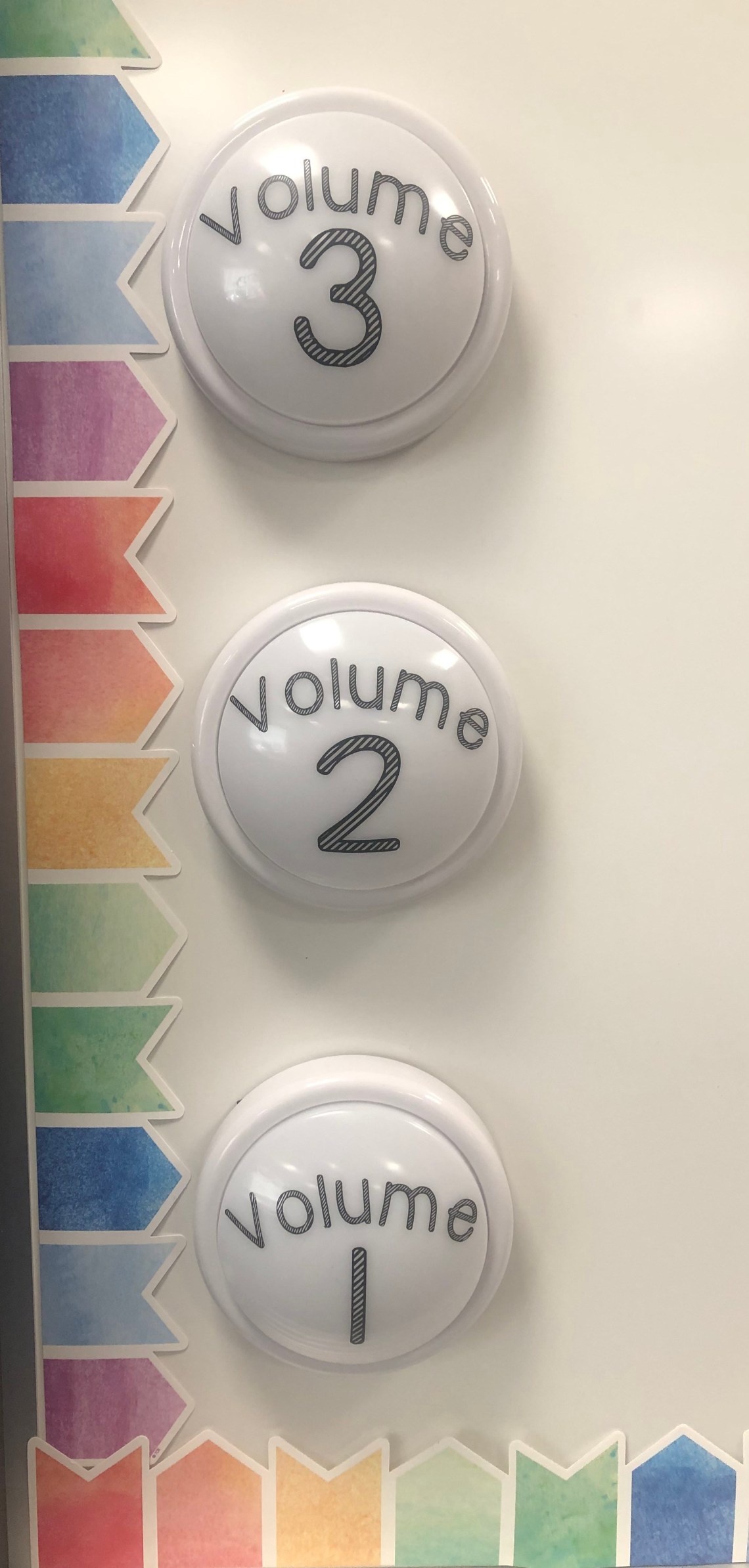
I visited my friend’s classroom and she had this posted. Brilliant right? Nothing like a clear measure of needed, desired, or expected volume in the classroom.
So, in late January, I decided to get prepared and stock up on literature to make Black History Month as inclusive as possible.
I made deliberate choices for my own development too–I read new books, I read about new and unknown history, I read literature by new authors. It’s been a great experience and I’m thrilled that I stuck to my goal.
March is Women’s History Month. I am on the same path and journey to expand, broaden, and ensure a successful Women’s History Month.
This month, on my own time, I will read stories by women only. Each woman though, will have to have a different background–meaning, if I read a book by a woman from Japan, next book needs to be a woman from another place in the world. This way, I continue to expand my perspective, my lens, and my readership.
For my students, I will do my best to do the same. As an American, in the United States, I will probably have more titles and stories about notable American women; however, in this case, each American woman will need to hail from a different part of the States, illustrate a different time period or component of history, and/or represent a different community (i.e. Jewish, Muslim, Buddhist, Black, Asian, Native, etc.). Again, the purpose is celebrating the vastness of women’s contributions.
At times, this can be a daunting goal, but once it’s started it comes naturally–and it’s enjoyable. So, I’m off to the library 📚 and my Amazon account 😉, wish me luck!
–Jane Smiley
 C is for Camacho