Blog

Beginning of the Year Checklist

Need a reminder for what to get ready?

Looking for added suggestions on how to be ready for the new year?

Well, here it is:

  • student files – a designated space, and folders ready with names on them
  • plenty of pencils, and sharpened
  • a few pencil sharpeners — one is never enough
  • an empty bulletin board (ready for students to fill)
  • new student folders (just have a few on-hand with copies of the items you handed out the first week, and maybe a few diagnostics)
  • snacks — everyone needs a snack drawer
  • medicine — have some ibuprofen for those headache days, and whatever you take when you feel that tickle in your throat (Cold-eeze, Emergen-C, etc.)
  • an extra pair of shoes — just in case the day’s shoe choice is a bust, or you decide to take a walk before/after school
  • pens — lots of them, preferably in a few colors
  • emergency folder — that first fire drill comes earlier and earlier each year, have evacuation materials ready
  • a schedule posted — you’ll be happy that first month for this, trust me
  • blank cards — to write a few nice notes or a few thank yous whenever inspired
  • a sub folder — for the last minute and unfortunate sick day (have a student roster and a few master copies of basic items on-hand for anyone to use)

It’s not a complete list, and it’s not a list focused on just you, just the learning, or just the classroom. It’s a list of those odds and ends that come up every year, the things I routinely remember later, or the things I realized I should probably commit to getting ready next time.
 

Classroom Tip #1

As we begin a brand new year, we need to consider a theme . . . for the classroom. Not in terms of a reading unit or any other learning unit, but a theme for decor.

I can write pages on how to decorate, how to decorate well, and how to decorate with meaning, but let’s first begin with a theme. The theme will drive everything else.

A classroom with a theme can provide a more thoughtful starting point to creating a space that is equal parts vibrancy, routine, familiarity, fun, and organization.

Before we can begin to discuss each of these elements, and those previously mentioned, first decide on a theme.

Suggestions/possibilities/ideas:

  • Animal (pick one animal, animals from your region, etc.)
  • Amusement Park
  • Black & White
  • Comic books/Superheroes
  • Desserts
  • Disney
  • Gardens
  • Harry Potter
  • Museum(s)
  • Ocean
  • Pixar
  • Social Media
  • Space
  • Sports
  • Travel
  • Zoo

These are just a few ideas–ideas I have in my mind for the future and ideas I have seen in other classrooms. I’m not leaving too much detail or direction now; rather, I want to spark interest and inspiration as classrooms begin to be decorated.

Decide on a theme. Think of its elements. Think of classroom-based translations for your theme. Write it all down, start designing and decorating, and then come back here–I have much more to say 😉

Things I never knew . . .

Installment #10:

Five things I never knew . . . until I became a teacher:

  • brand name glue sticks are really, actually better
  • glue sticks don’t actually last that long
  • glue sticks need names on them–each kid just needs their own
  • glue sticks are better than any other glue option
  • I hate glue sticks

Diverse Literature

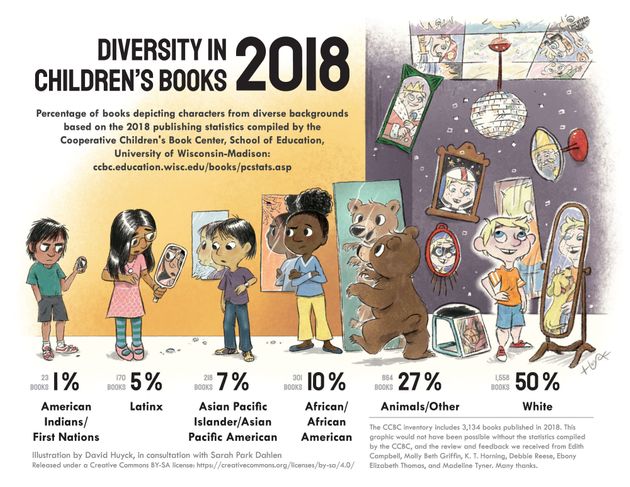
IMG-6195

I found this image and the links to it on theconsciouskid on Instagram.

As I stated in my previous post, throughout my entire teaching career I knew that children’s books lacked diversity. I knew that required reading lists, recommended reading lists, and the availability of representative literature in any library was lacking–lacking in terms of culture, language, ethnic, racial, and religious representation.

What I did not grasp, until I saw this image and began a deeper investigation, was how much more work, effort, and searching is required on my part to actually find the few books that are available. What I did not grasp was why I had always had a hard time finding quality, and numerous, options for my classroom.

I have worked in schools that are predominantly Latinx/Hispanic/Chicano and African/African-American/Black, my students deserve stories that mirror their experiences and their voices. Furthermore, even if my students were not predominantly LatinxHispanic/Chicano or African/African-American/Black, every child deserves to see themselves represented, and every child needs to learn how to see and listen to the stories of people unlike them.

This image is a sort of call, for me and you. The work is big, but if we do it together, if we advocate, and share, and make the effort, we can create a more equitable, representative, and inclusive classroom for our students–something each child not only has a right to, but that every child needs now more than ever.