Monthly Advice–November

November is a short month.

In the United States, in November, we have Veterans’ Day, which sometimes turns into a 4-5 weekend. Then, we have the Thanksgiving Day holiday, which is increasingly turning into a whole week vacation. In addition to these days, there are staff development days, maybe furlough days, or perhaps you already have a 4-day work/school week.

So, in November, while we have 30 days in the month, we have very few actual instructional days. Therefore, my greatest advice is review. Before the semester ends, this is probably the best time for review and extension. Instead of trying to cram a new concept, especially a complex standard or new set of standards, insert review lessons and extensions.

As we know things are forgotten over a weekend, let alone a long weekend or a week-long vacation. So it makes sense, in a month filled with multiple gaps, to insert lots of review (and a little less new).

Suggestions:

  • Bring back a center–their favorite one.
  • Bring back a center–one that was “too hard,” and give it another chance.
  • Add another layer to learning–modify a previously completed experiment, add another component to an existing center, etc.
  • Create a make-up hour/day for students that have missed assignments or want to redo assignments.
  • Have students re-imagine, or reapply, an existing assignment to another text.
    • example: if a student was required to research the time period of a text that you assigned, this month have the student pick a different text/time period to practice those same research skills

This month: review and extend. Your students will benefit, and you will be providing them a much deserved opportunity for added success.
 

Gallery

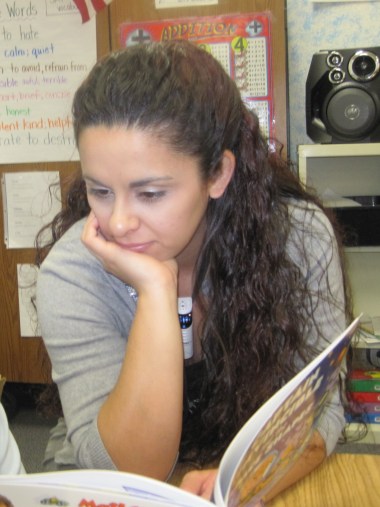
One of my favorite things in the classroom is listening to a student read. Not for assessment, not to monitor them–just to listen and give them an opportunity to learn for learning’s sake.

Not every moment needs to be fast-paced, data-driven, or assessed. Take a short break from being in charge, or being in full teacher-mode, and just appreciate that reading is learning, that reading should be enjoyed, and that giving a student your undivided attention is beautiful.

IMG_4460 (2)

Monthly Advice–October

In September, hopefully, some time was taken to document and catalog initial impressions.

In October, it’s time for an added focus on grading and assessment data.

  • Go over your gradebook and make sure every child has grades in every subject.
  • Make sure your pile of grading is low, if not complete. If necessary, start making daily goals for grading.
  • Go over your roster and make sure every child has taken every diagnostic.

This may sound ridiculous but it’s a good reminder.

School has been in session for nearly two months, but the first couple of weeks are hectic. Then, some kids start late, some have already left, some have switched classes, and some have been absent. It’s easy to get lost in the shuffle. Not to mention piles of grading grow–faster than anything else.

So in October, make it a point to go through each subject and each student’s profile.

  • Create a schedule and stick to it.
  • Take notes on what’s missing.
  • Get to that pile of grading.
  • Start writing some report card comments.
  • Send home progress reports.
  • Revamp small groups based on assessment data.

The gradebook is a databook. The gradebook is the book for kids, families, and supervisors.

Assessment data is worthless if it’s not used. Use it. Grading needs to get done. Get it done.

This month, take the time to look over grades and data, make sure it’s neat, ordered, and caught up because November and December are filled with events, breaks, and vacations. Do more now so you’re not rushed or stressed later.

In October: focus as much energy as possible on grades and data.

Centers Tip #1

In the primary, world centers are a staple component of the day. As someone who started in kindergarten and moved up grades, I saw centers go away as I moved up in the elementary world. Not for me though. Not in my classroom.

Centers provide enrichment, intervention, and choice.

Centers Tip #1: Have centers in place.

I have taught all grades from kindergarten to 5th grade in a regular classroom setting in some capacity. There is value to centers in every classroom.

Dig through the research, ask fellow teachers, get on Pinterest, get creative–make centers. Centers for reading, centers for math, centers for science, centers for everything.

Start small: one subject, just a couple of centers. Grow from there. Just remember: make a time, a place, and a routine for centers.

Teacher Tip #2

This is for all the newbies:

Always have extra clothing–and shoes.

I don’t care if you teach pre-kindergarten or 12th grade English, teaching is a messy business.

I learned this the hard way. Trust me–just have something extra available.

In my car I kept a tank top and a spare pair of pants. In my classroom, I had a T-shirt, pants, running shoes, and flats. For my own safety and for my own peace of mind, I started to keep this stash on-hand after my first year of teaching. And yes, everything was not only needed at some point or another, everything was needed multiple times.

***

I have stepped in vomit, I have been sneezed on, I have sat in urine.

I have tried to fix the copier and the ink cartridge exploded on me. I have slipped in grass and on the concrete for no reason. I have had both tops and bottoms get caught on something and rip.

I have spilled my coffee while trying to talk and drink said coffee–multi-tasking is hard. I have tried opening milk, and it’s a lot harder than it looks.

I have leaned against a counter and a desk, and my shirt came back with mysterious stains. I have had food wiped on me because I was mistaken for a napkin.

Primary was messier than intermediate for me, but it’s all a mess.

When you’re dealing with developing children, you’re stressed, there’s food and drink around, there’s lots of movement happening–you just never know what might get stained, wet, or ripped, so always have some spare clothing handy–trust me, someday you’ll be grateful you do.

Learning is messy. Just pack some extra clothes.